Essay exploring how mainstream newcomers and manipulative actors change and degrade creative subcultures, and strategies to resist that decline.
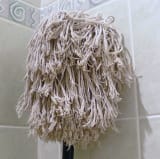
Image courtesy Wikimedia
Subcultures are dead. I plan to write a full obituary soon.
Subcultures were the main creative cultural force from roughly 1975 to 2000, when they stopped working. Why?
One reason—among several—is that as soon as subcultures start getting really interesting, they get invaded by muggles, who ruin them. Subcultures have a predictable lifecycle, in which popularity causes death. Eventually—around 2000—everyone understood this, and gave up hoping some subculture could somehow escape this dynamic.
(You can read very brief previews of my analysis of subculture dynamics in this table and/or this page.)
The muggles who invade and ruin subcultures come in two distinct flavors, mops and sociopaths, playing very different roles. This insight was influenced by Venkatesh Rao’s Gervais Principle, an analysis of workplace dynamics. Rao’s theory is hideous, insightful nihilism; I recommend it.1
The birth of cool
Before there is a subculture, there is a scene. A scene is a small group of creators who invent an exciting New Thing—a musical genre, a religious sect, a film animation technique, a political theory. Riffing off each other, they produce examples and variants, and share them for mutual enjoyment, generating positive energy.
The new scene draws fanatics. Fanatics don’t create, but they contribute energy (time, money, adulation, organization, analysis) to support the creators.
Creators and fanatics are both geeks.2 They totally love the New Thing, they’re fascinated with all its esoteric ins and outs, and they spend all available time either doing it or talking about it.
If the scene is sufficiently geeky, it remains a strictly geek thing; a weird hobby, not a subculture.
If the scene is unusually exciting, and the New Thing can be appreciated without having to get utterly geeky about details, it draws mops.3 Mops are fans, but not rabid fans like the fanatics. They show up to have a good time, and contribute as little as they reasonably c