

A dispatch from the AI Psychosis Summit
reason.com ↗Report from the AI Psychosis Summit in NYC covering artists, developers, and builders exploring AI-driven creativity and obsession.
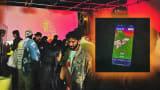
When I arrived at last week's AI Psychosis Summit in New York City, I found no group therapy sessions or zen gardens, only a DJ, a room full of builders, and a cooler of Diet Cokes. The event was held in the remnants of a shuttered bank in Chinatown. While still outside, I could see through the graffiti-stained window white lines of code projected on a hanging screen. Pasted by the entryway were AI psychosis memes, their connections mapped with red string. AI psychosis memes connected by red string were pasted by the entryway. (Meagan O'Rourke/Reason) Around the edges of the room, vibe coders and builders stood at tables, like eager students ready for show-and-tell. Beside them were computers and TVs displaying their digital creations. The "summit," organized by tech-optimists Macy Gettles, Wesam Jawich, Matt Van Ommeren, and Mauricio Trujillo Ramirez, was intended to showcase AI passion projects. AI psychosis, Van Ommeren told me, "evades definition," but the term is a way to acknowledge being "confused about your relationship with AI." "We can't navigate it, and so we need some very general and jokey way to confront it," he said. "So we just say AI psychosis just [to] dismiss reckoning with it." Event organizer Mauricio Trujillo Ramirez displayed his art installation inspired by a Yousuke Yukimatsu DJ set. (Meagan O'Rourke/Reason) Although San Francisco may seem like the natural place to host an AI Psychosis Summit, Van Ommeren told me he was determined to have the event in New York, at the "intersection of art and technology." "I think some of the impetus behind it is that we were going to AI events that felt really corporate, and people were just showing tooling, and they were talking about optimizing their work stuff," Van Ommeren said. "Honestly, that's not interesting to me. I wanted to find people who are artists or doing something crazy and weird or frivolous." The projects were, in fact, far from corporate productivity tools. One presenter, Joshua Wo