Artforum column by Theo Belci discussing Joshua Citarella’s work as shown at the Whitney Biennial, analyzing themes and presentation.
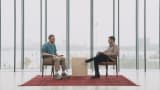
I LISTEN TO PODCASTS on the train, while washing dishes, sometimes while walking around. It’s hard to think of a more passive medium, engineered for split attention—the thought of dedicating one’s attention fully to a podcast is as antithetical as listening to drive-time radio over a hi-fi system at home. Yet on a beautiful Saturday morning in late March I found myself attending a live taping of Doomscroll, Joshua Citarella’s podcast about online culture and politics, at the Whitney.
When the Biennial opened early last month, viewers learned that Citarella’s sole contribution as a participating artist would be a series of these Doomscroll tapings, which would be ticketed and open to the public. On my Instagram feed an angry cloud of stories questioned whether the podcast, generally admired by a certain downtown set, belongs in a museum setting or constitutes an artwork in the first place. It’s tempting to call the thing institutional clickbait and move on. But tracking the path that led Citarella—a figure whose influence stems in part from a productive tension with institutional authority—to the auditorium of the Whitney sheds valuable light on the changing priorities of museums and artists in capturing and developing new audiences.
Related
Citarella came up as a photographer/Net artist in the New York post-Internet scene of the 2010s before pivoting, pre-pandemic, to a research-based art practice centered on political discourse on social media and messaging platforms. Starting from the thesis that legacy media and mainstream platforms for art, culture, and activism are no longer able to meaningfully drive discourse in the digital age, Citarella looked to fractured (and increasingly cloistered) online pockets to understand how young artists and activists develop political positions. Across various formats—including the podcast, which he started in 2020; a Discord chat and a Twitch stream; a 2021 book called Politigram and the Post-Left; and a blog-style web page