Longform essay on 'looksmaxxing'—how appearance optimization, metrics, and social media reshape standards of beauty and self-improvement culture.
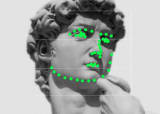
When did everything become math? Written by: Ruby Justice Thelot It was only a matter of time before Photoshop’s liquify tool reached out through the screen like Samara from The Ring and, bearing a hammer, came and started striking our cheekbones to make us resemble the confabulated digital faces it had created for the last two decades.We've staunchly been in the realm of the facial hyperreal, where most celebrities or influencers we encounter online have utilized filters or FaceTune in order to make their faces look better on social media. Today's looksmaxxing movement radically proposes that the virtual is not enough; we must actually look like our avatars. Looksmaxxers are willing to go to great lengths to achieve this idealized beauty: strict diet regimen, using methamphetamines as hunger suppressants, gray market peptides, fat dissolvants, human growth hormones, illegal testosterone, and even bone-smashing (tapping one’s face with a hammer to sculpt it). In its contemporary form, looksmaxxing emerged in the late 2000s and early 2010s from the margins of male-dominated Internet subcultures, particularly threads on 4chan and adjacent forums that would later splinter and crystallize into incel and “blackpill” communities. Currently, most of the actual in-community conversation happens on Looksmax.org, while discourse engendered on social media is spread through the viral dissemination of clips taken from the quasi-quotidian streams of the movement’s most popular figures, like Clavicular, Androgenic, and ASU Frat Leader. Clavicular and the rest are doing what not even Sophie, the late electronic musician, could have dreamed of. In her song “Faceshopping”: “I'm real when I shop my face.” Clavicular’s response? “I'm real when I smash my face.” These online spaces have developed taxonomies of attractiveness with quasi-scientific precision: craniofacial ratios (the distance between different parts of the face), canthal tilt (the angle of one’s eye corner), jaw projecti