Exhibition page for Harm van den Dorpel’s ‘Quantizer’, a series of generative works using algorithmic/code-based processes shown at SOLOS.
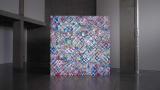
ExhibitionHarm van den DorpelQuantizerPresented bySOLOSThis August, SOLOS presents Quantizer, the latest body of work by Harm van den Dorpel and his second exhibition with the programme, following Struggle for Pleasure in early 2024. Conceived and refined over the past year, the series continues his engagement with generative systems and algorithmic processes, code as a medium for both thought and image.An important voice in Post-Internet Art, Harm has been part of shaping the field for over a decade. He established the online platform Club Internet in 2008, and later founded left gallery, which between 2015 and 2022 experimented with selling “downloadable objects.” Across these ventures, and throughout his artistic practice, he has sought to design programs that yield aesthetic systems of emergent complexity, structures that not only evolve but provoke philosophical reflection on our relationship with the internet and digital culture. In Quantizer, the pace is deliberate. Harm works against the culture of instant consumption, instead inviting viewers to linger, to watch images change slowly over time. The work draws from his long-standing fascination with impermanence, shaped in part by the Tibetan Buddhist practice of sand mandalas: intricate compositions created over days or weeks, only to be swept away in a ceremonial gesture of release. The gesture acknowledges the inevitability of change, a sentiment Harm reinterpreted in the context of Web3 by favouring flux over fixity.The title refers to quantization, an algorithmic process that converts continuous information into discrete units. In this series, the term functions doubly: as a technical descriptor of the generative logic at play, and as a poetic shorthand for the beauty of precision, the elegance of working within limits. Dithering, once essential to early digital graphics, appears here as both an aesthetic device and a conceptual anchor. The palettes, drawn from computing history, recall the chromatic sig